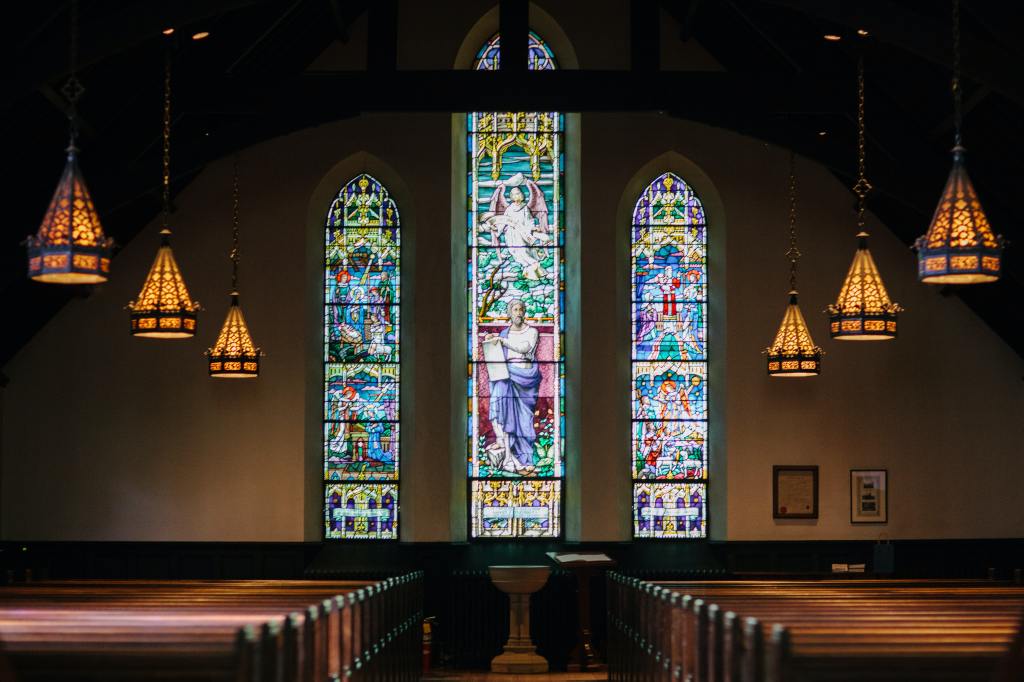
Growing up, the idea of a church was foreign to me. My family practices Buddhism, and I’d remember the occasional dreaded Sunday morning visits to the temple. The familiar early mornings. Performing rituals, eating food offerings, and more rituals. My siblings and I barely knew anyone there, albeit having been visiting it ever since we were little. Well, I mean not unless if you consider the aunties who occasionally engage in small talks with my mother – “Aiyo, you daughter so big liao ah.” or this particular uncle who playfully teased me “You got boyfriend right…I know.” as people we knew. We were considerably, a stranger to that community.
I remember feeling jealous at some point over the fact that my cousins get the opportunity to attend church, Sunday Schools programs and camps. Those sentiments grew stronger over time, especially after attending a 5-day program at their church during the school holidays – we sang, danced, memorized some Bible verses and made crafts. Strangely enough, with my poor memory power I could still vividly replay the scenes in my head and sing the lyrics of the songs that we repeatedly sang today. Imagine the impact it had on me as a child.
Church was a place where I felt, for lack of a better word, “relevant“.
Today, I am a Christian. Upon looking back and reflecting on it, I have realized that my idea of “the church” has shifted drastically. These are some of my quickly jotted-down thoughts upon reading Calvin (find below), one of the most significant giants in the Protestant Reformation history on how he viewed the church. (Not an avid reader growing up myself, the language that he used has put my comprehension skills to the test. I will try nevertheless – bear with me.)
- The Necessity of the Church
The title speaks for itself. Note the word that he chose – “necessity”. Necessity refers to the absolute essential requirements, in this case, of the church. These criteria cannot be separated from the church, much like how air is the basic necessity of human beings for survival. In short, I think he is conveying to us in this section, that a church is only “alive”, “functioning” or defined as “a church” if these necessities were met.
i) The Institution of “Pastors and Teachers”
Ephesians 4:11-16 (ESV)
11 And he gave the apostles, the prophets, the evangelists, the shepherds[a] and teachers,[b] 12 to equip the saints for the work of ministry, for building up the body of Christ, 13 until we all attain to the unity of the faith and of the knowledge of the Son of God, to mature manhood,[c] to the measure of the stature of the fullness of Christ, 14 so that we may no longer be children, tossed to and fro by the waves and carried about by every wind of doctrine, by human cunning, by craftiness in deceitful schemes. 15 Rather, speaking the truth in love, we are to grow up in every way into him who is the head, into Christ, 16 from whom the whole body, joined and held together by every joint with which it is equipped, when each part is working properly, makes the body grow so that it builds itself up in love.
God gave authority to the Word ministers in the church – the “pastors and teachers” to teach the church the Word of God, omitting nothing that might create “holy agreement in faith and for right order”. In simpler terms, unity and order in the church is created on the basis of the faithful teaching and preaching of The Word through the authority of the pastors and teachers. Any alternatives to that, is a church that is without unity and order, and is ultimately against the authority that God had instituted.

ii) Institution of Sacraments
God has graciously “accommodated himself to our capacity, has prescribed a way, though still far off, to draw near to him”. I personally find this sentence rather meticulously put and particularly beautiful. It highlights the breathtaking reality that the God who created all things – the universe, the galaxies and the planets, exceeding far beyond our comprehension has made a way for us, a created, finite and sinful being to draw near to Him. If that didn’t already blow your mind…He, has carefully instituted sacraments (The Holy Communion and Baptism) in order that we would be strengthened in faith, as “prisoners of the house of our flesh” to draw near to him.
With that, the church is as a result, “nourished by God’s help and ministry as along as they [we] are infants and children, but also that they [we] may be guided by her [God’s] motherly care until they [we] mature and at last reach of the goal of faith”. (Ephesians 4:13)
I’ll continue more when I can. 🙂
You can find Calvin’s Institute Vol 4 here:

 Occasional Musings