Awoke at 5, “Yesssss extra pockets of time in the day!” I thought to myself.
Cooked myself some french toast, made myself a nice cup of Nescafe. (The joy of just being able to make a good breakfast, sip on a cup of coffee early in the quiet of the morning.)

Life has been strange so far. With the recent outbreak of the COVID-19 that the Word Health Organisation (WHO) declared as pandemic, it has changed the routines of many all around the world including myself. The Malaysian government has imposed the “Movement Control Order” (MCO) which restricted our mobility, “prohibiting general prohibition of mass movements and gatherings across the country including religious, sports, social and cultural activities. To enforce this prohibition, all houses of worship and business premises should be closed, except for supermarkets, public markets, grocery stores and convenience stores selling everyday necessities.”
Needless to say, everything that involves a form of “social gathering” in my typical routine for the past 2.5 years in university has changed – no more taking 7 minute brisk walks on the pedestrian walk late to a lecture, with half eaten Oat-Krunch in my hands, no more greeting friends, checking in with them in lectures, no more complaining about how horrible and costly the cafeteria food is (it really is horrible) at the “umbrella area”, no more being in CF, greeting new faces, preparing, setting up, moving from meetings to meetings, the usual Sunday gatherings. You name it, there you have it. Everything has changed – lectures, meetings, CF, church gathering, even mealtimes, from meeting physically to virtually. Just you, your room and your screen. That has been my life for about 2 and a half weeks now.
How have I been doing?
Well, having more time on my hands and living alone – I got to think, process and consolidate my emotions better. The perfect example is evident in this “reflection” post here. The “blog” was actually created a little over a year ago but I’ve never made use of it properly, merely a couple of incomplete drafts here and there (that sounds like a lot of things that I do, oh the struggles of an explorer). Now, with “more time”, I have decided that there is no better opportunity to write, to (1) improve my ability to consolidate thoughts and translate them into words (to be able to articulate well in short) (2) to track the progress of my growth as a Christian (I for one am horribly bad in this area) (3) to encourage others to do the same (Provided that I am even courageous enough to share this publicly, to my inner circle of friends at least. If you are reading this, you are cool.) On top of that, there is no better time to reflect on how I have been faring for the past 2.5 years as an undergraduate, in university as well as in ministry throughout this period of time.
Nevertheless – back to the grind. I chanced upon an article this morning that is indeed timely in such situation. https://www.desiringgod.org/articles/kill-whatever-kills-your-love-for-god. Let me take you through this article.
The article speaks about the natural disposition that we as sinful human beings have towards sin in this age, and addresses succinctly the struggles we have in putting to death our sinful nature followed by a call to action to place our full trust in God be transformed. (Side note: If you find this irrelevant to you, do allow me to encourage you to read on and I am happy to chat with you, especially matters pertaining to this, just e-mail / DM me anytime.)
Sin is a dangerous thing.
Ever since Adam & Eve went against God (Genesis 3:1-6), taking upon the bite from the forbidden fruit of the tree, the good world that a good God created has turned upside down. The world was cursed – chaos introduced, relationships between man and God, and between man torn-apart, diseases and death struck us (Genesis 3:14-19). What was once good and perfect was destroyed in an instant, and we see this evident in our lives up until today – especially even more evident in the COVID-19 pandemic that just hit us. It is a spine-chilling reality.
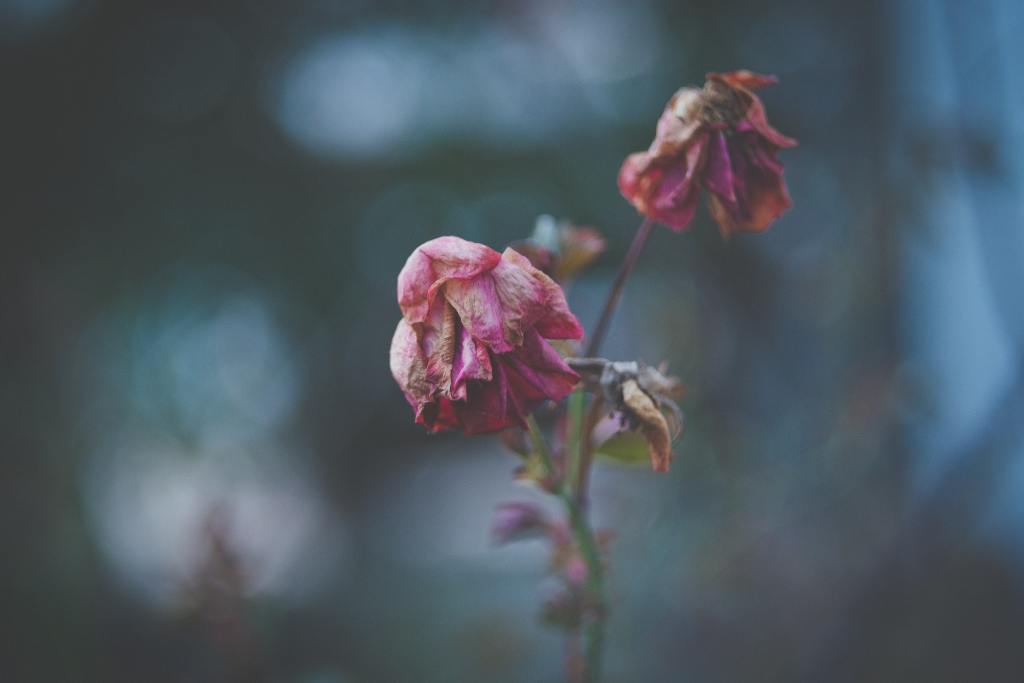
As a Christian however, I thank God that I am no longer fearful of this reality because of the eternal security of hope and salvation that I found outside out myself – through Christ who took upon the wrath of God for my sins in his death and resurrection. (I’ll speak more about this sometime later but for the purposes of this topic, this context is necessary) I can now be free from the shackles of sin that no longer bound me, and live in this new identity that His work has brought me.
Hmm. That sounds just about right. It seems that I am now a perfect, sinless human being that does not sin anymore. I am visualizing a halo on top of my head – Saint Kimberly. I am just entertaining myself don’t mind me. Well jokes aside, if you know me well, that is a complete utter untruth. I sin, every single day of my life – both intentionally and unintentionally as a result of living in this fallen world. What makes the difference however, is that I have been given the power to put to death sin because of Christ. This brings me to the purpose of the article today – a reminder of the reason why we persist in sin despite having been saved, and a call to repentance.
In this article, Kell is direct and upfront. He puts it simply, Christians still sin because “we love sin”. It is a paradox, a hate-love relationship. He states:
“We desire to love God and live for him — yet we still love sin. We hate that we love it, but we love it nonetheless.”
In my context, it is far too easy to always put up a front to display outward godliness as a church-goer, active-participant in ministry, hiding behind the facade of loving God and His people. Day in day out, being occupied with multiple ministry responsibilities, with schedules filled to the brim, too often have we become overly functional and have failed to consider the purpose behind the task that we do. We have forgotten the conviction that once brought us to love and serve God. Conversations, as a result slowly became stale and non reflective. We silently withdraw from people, and sin in secret. All the penned-up thoughts, “Why is this meeting taking forever?” “I don’t even want to be here.” “Why do I have to do this instead of him/her?” and the myriad of secret sins we do alone. We remain comfortable there, letting the devil to get hold of us while “loving God” at the same time.
“In Freudian psychoanalysis, the pleasure principle (German: Lustprinzip)[1] is the instinctive seeking of pleasure and avoiding of pain to satisfy biological and psychological needs.”
This principle brings me to Kell’s next point, “because killing sin hurts”. As human beings, we instinctively avoid pain and seek pleasure to satisfy our needs. The killing of sin requires one to acknowledge their love for it, confessing it and actively going against that very thing that you love. It hurts. I’d like to imagine a scenario where I am in the desert, with days without proper meal and water to drink. The sight of anything seemingly potable or edible would be extremely tempting to ease my discomfort. In that instant, a full meal was being offered to me – but I know well that it is poisonous and eating it will put an end to my life.
The battle. “To eat or not to eat?” Gulp.
Reaching out my hands, I grabbed the food and consumed it.
“Delicious!“
My life then flashed before my eyes.
See my point here, we are madly, deeply obsessed with sin. For obvious reasons, it brings us an immeasurable instantaneous pleasure , providing us with endorphins as we indulge in these acts. That is what makes the killing extremely difficult. Kell explains:
“If you will slay sin, it will hurt. Confession carries terrifying prospects with it. Physical withdrawals may be overbearing at the outset. A lover’s heart may be broken. Shame may meet you every time you step out the door. Early in my walk as a Christian, I became ensnared in an immoral relationship and I remember thinking that I would rather die than break it off and confess my immorality.”
Perhaps, perhaps – the root cause behind the reason why we love sin and find it immensely difficult to put it to death is this ultimately – “we forget the cost”.
Aptly, Kell illustrates it for us.
“Though Israel’s bodies journeyed toward the Promised Land of Canaan, their hearts were pointed back to Egypt. They looked on their former slavery with rose-colored glasses. “We remember the fish we ate in Egypt that cost nothing, the cucumbers, the melons, the leeks, the onions, and garlic” (Numbers 11:5; Exodus 16:3). Sin tempts us to daydream about how wonderful our slavery to it was. It assures you that its pain was worth its pleasure. It lures you to linger on past perversion with fondness, even wishing you could relive it once again. Meditations like those mark the road of apostasy.”
The Israelites, upon being saved by God and liberated from slavery to the Pharaoh grumbled against God in hunger, reminiscing the days when they “sat by the meat pots and ate bread to the full” (Exodus 16:3). They would much rather return to be a slave in Egypt to suffer, than to anticipate the possession of the land that God has promised.
Much like us, we are no different. We love sin, so much that we lose sight of what it means to be His children, enjoying the covenantal blessings that He promised. We are constantly fixated on what is ephemeral and short-lived.
Someone once shared this quote from C.S Lewis that encapsulates this scenario really well, it goes like this:
“We are half-hearted creatures, fooling about with drink and sex and ambition when infinite joy is offered us, like an ignorant child who wants to go on making mud pies in a slum because he cannot imagine what is meant by the offer of a holiday at the sea. We are far too easily pleased.”
C.S. Lewis, The Weight of Glory, and Other Addresses
Phew. If you have read up until this point. Thank you for being patient with me (Let me know, I’ll give you a cookie :)). Kell ends the article with an encouragement for us to plead with God to show us the beauty of his presence, to ask God to help us to hope in the eternal pleasures reserved at His right hand and to have the heart of Christ.
Indeed, no truer words have been spoken. We are incredibly finite beings, with zero ability to entangle ourselves from the misery of sin but only to come before God, asking for His pardon and mercy for a complete change in heart. This has to be the only way out. Praise God for that!
I hope that you are as encouraged as I am in putting this together and are now considering the sins that you have been struggling with. Put your hope in Christ alone, and trust me [God], you will be liberated.
References:
https://en.wikipedia.org/wiki/2020_Malaysia_movement_control_order
https://www.desiringgod.org/articles/kill-whatever-kills-your-love-for-god
https://www.goodtherapy.org/blog/psychpedia/pleasure-principle
https://en.wikipedia.org/wiki/Pleasure_principle_(psychology)

 Occasional Musings